Building Cross-Regional Trust: Inside Femina ry’s Nordic, Baltic and Caucasus Dialogue
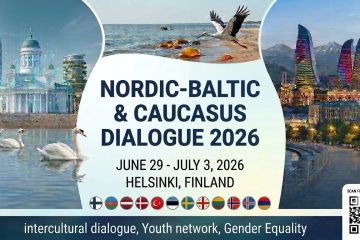
Five days, eight countries, and a working test of whether cooperation between the Nordic, Baltic and South Caucasus regions can outlast a closing ceremony.
Why This Forum Mattered
A gap Nordic-Baltic cooperation has never closed on its own
Nordic and Baltic civil society organisations have spent decades building cooperation through shared EU funding architecture and dense institutional networks. Organisations from the South Caucasus have historically sat outside that circuit — not for lack of relevant expertise, but for lack of infrastructure connecting them to it.
It was Femina ry, the Finnish organisation working in migrant integration, legal empowerment and gender equality, that decided to test whether that gap could be closed — not through another one-off exchange visit, but through a structured, working forum designed to produce partnerships that would outlast the closing ceremony.
Why Femina ry Took the Lead
Legal infrastructure, community trust, existing partnerships
For more than five years, Femina ry’s Legal Clinic has advised several hundred migrant clients in Finland, reporting a 90% dispute-resolution rate, while the organisation built parallel programming in gender equality, youth participation and intercultural dialogue. That combination gave Femina ry a case for convening organisations that had rarely worked in the same room — not simply hosting a conference, but initiating a cooperation model that did not previously exist between these three regions.
Naming Real Constraints
A Caucasus partnership built on honesty, not ceremony
The Azerbaijan Democratic Student and Youth Organization (ADSAYO), represented by chairman Dr. Asif Asgarli and executive director Gulnara Bagirova, carried much of the forum’s substantive programming — and did not shy away from naming constraints that Nordic partner organisations do not face in comparable form: limits on freedom of assembly and NGO funding, gaps in civic education, and patriarchal norms that continue to restrict women’s participation in public life.
In a later keynote, he pushed the argument further, telling participants that cultural exchange “is powerful — but it often stops at the surface,” and that friendship and mutual understanding, while necessary, are not sufficient on their own. Durable cooperation, he argued, requires permanent partnerships, shared governance, and funding mechanisms built to outlast any single group of participants.
Shared Ground
Gender equality and digital safety, across very different political systems
The forum’s substantive core ran through sessions led by Gulnara Bagirova — where Nordic and Caucasus organisations, despite operating under very different political conditions, described strikingly similar structural problems: occupational segregation, underrepresentation in leadership, and a digital environment that exposes young women and minority communities disproportionately to harassment.
Where the Programme Left the Conference Hall
The House of Azerbaijan, and a Baltic community garden project
By the evening study visit to the House of Azerbaijan in Helsinki — structured as a tour, a reception and a presentation of the organisation’s work — the distinction between cultural programme and working session had largely dissolved. Conversations that began over traditional hospitality moved naturally into project ideas.
A Baltic partner organisation’s presentation on the Erasmus+-funded “Think Green” initiative offered the clearest illustration of the forum’s underlying logic: a modest, locally scaled community-gardens project, translated through Erasmus+ funding mechanisms into methodology other organisations across three regions could actually use.
Outcomes
What was signed, and what it is worth
The Dialogue closed on 3 July with concrete deliverables:
- Joint Statement of Nordic–Caucasus Civil Society Cooperation, signed by all participating organisations
- Three Working Group Action Notes identifying priority areas and responsible organisations
- Expressions of interest for joint Erasmus+ and Nordic Culture Point applications for 2026–2027
- A post-forum report and shared photo/video archive for participating organisations
- Certificates of Participation issued to all delegates
International forums are often judged not by the declarations they adopt, but by the partnerships they sustain. The true measure of this Dialogue will become visible in the coming months, as organisations begin submitting joint Erasmus+ applications and putting the commitments agreed in Helsinki into practice.
Looking Ahead
The story that hasn’t been written yet
The success of the Nordic, Baltic and Caucasus Dialogue will not ultimately be measured by the number of sessions delivered or documents signed. It will be measured by something far less visible: whether organisations continue to call one another when new ideas emerge; whether the young people who met in Helsinki become the project leaders of the next cycle; whether a future Erasmus+ consortium already has trusted partners in place before the application process even begins.
That story has not yet been written. But after five days in Helsinki, it has already begun.

0 Comments