Nordic Youth Media Lab | Training #4
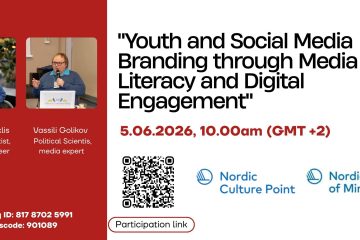
The final workshop of the Nordic Youth Media Lab training series brought together participants from Finland, Estonia, Sweden, and Denmark for an inspiring exploration of digital communication, personal branding, and responsible online engagement.
Held on 5 June 2026, the session titled “Youth & Social Media Branding through Media Literacy and Digital Engagement” marked the conclusion of four months of international learning, collaboration, and dialogue.
Yet rather than an ending, the workshop felt like the beginning of something new.
Beyond Followers and Algorithms
Today’s young people communicate in an environment shaped by algorithms, trends, and constant competition for attention.
But meaningful communication is not measured only by likes, views, or followers.
Throughout the workshop, participants explored how authentic storytelling, ethical communication, and media literacy can help create stronger connections and more trustworthy digital spaces.
The training encouraged participants to think about their online presence not as a personal brand alone, but as a platform for ideas, values, and positive social impact.
Building Trust in Digital Spaces
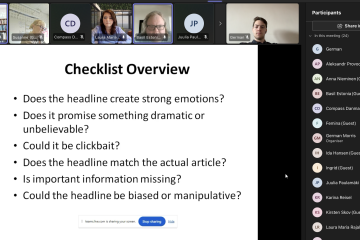
Led by communication expert Michael G. Kavuklis, the workshop focused on practical tools for creating meaningful content, engaging audiences, and communicating responsibly in an increasingly complex information environment.
Participants explored how media literacy principles can strengthen digital communication and help counter misinformation, polarization, and online toxicity.
Interactive exercises challenged participants to develop communication strategies that balance creativity with credibility.
Expert Perspective
According to Michael G. Kavuklis, trust is becoming the most valuable currency in digital communication.
“Technology changes constantly, but trust remains the foundation of meaningful communication. The most successful communicators are not those who attract the most attention, but those who create genuine value and build lasting relationships with their audiences.”
Voices from Participants
Participants reflected on the practical relevance of the workshop.
“I learned that personal branding is not about promoting yourself. It is about communicating your values and contributing something meaningful to your community.”
— Youth participant, Estonia
“The workshop helped me understand how media literacy can improve not only how we consume information but also how we create and share it.”
— Youth participant, Sweden
Educators’ Reflection
Educators highlighted the importance of combining communication skills with ethical responsibility.
“Young people need spaces where they can experiment, create, and communicate while also reflecting on the impact of their messages. This workshop provided exactly that.”
— Youth worker, Finland
Looking Ahead: Nordic Media Festival 2026
The learning journey continues.
Participants, partners, media professionals, and young changemakers are now invited to the upcoming Nordic Media Festival 2026.
Four days. One region. A thousand stories waiting to be told.
📅 20–23 August 2026
📍 Scandic Avia Congress Hotel, Vantaa, Finland
🎟 Free of charge
🌍 Livestreamed globally
The festival will bring together young journalists, content creators, media innovators, educators, and civic actors from across the Nordic region to debate, create, collaborate, and broadcast the future of media.
Through panel discussions, workshops, media labs, live productions, and international networking opportunities, participants will explore how journalism, technology, democracy, and creativity intersect in a rapidly changing world.
Whether you are an aspiring journalist, storyteller, podcaster, filmmaker, influencer, or community leader, Nordic Media Festival 2026 offers a unique opportunity to learn, connect, and shape the conversations of tomorrow.
About Nordic Youth Media Lab
Over four international workshops, Nordic Youth Media Lab has helped equip a new generation of young people with practical skills in media literacy, information resilience, democratic participation, critical thinking, and responsible digital communication.
Together, participants have demonstrated that informed and engaged young citizens remain one of the strongest foundations of democratic societies.
Funded by
0 Comments