The most tangible outcome of our recent Erasmus+ training in Latvia wasn’t a certificate it was a portfolio of actionable projects. Each participant returned home with a clear concept and a plan to apply principles of safety, inclusion, and community education in their own fields. The result is a collection of six distinct initiatives: four individual projects, one co-created partnership, and one joint module developed by the entire group.
Here are the projects, presented with their authors.
Individual Concepts
1. Resilience & Well-being: Strengthening Psychological Support for Women Leaders by Wendy M.
This concept builds directly on Femina’s existing work. It aims to transform the current offering of free psychological consultations into a structured, multi-layered support system. The model includes training staff in psychological first aid and burnout prevention, embedding a new “Psychological Resilience and Well-being for Women Leaders” module into Femina’s leadership curricula, and creating an online self-help toolkit for women in remote areas. It is designed as a natural follow-up to the current Erasmus+ project and will form the basis of Femina’s next application.
2. Women’s Activities with Flower Recycling by Oksana S.
This project proposes creative and vocational workshops for women, turning discarded flowers from florists, events, and markets into new products like dried arrangements and natural dyes. It combines three core goals: providing a low-threshold activity for women outside the labour market, creating a small income opportunity, and promoting an environmental message about waste reduction. Proposed partners include local florists as material suppliers and community centres as venues.
3. Evergreen: The Healing Power of Nature by Sara M.
Designed for older people in Iranian cities, “Evergreen” is a community programme addressing social isolation and physical inactivity. It features light group exercise in parks, flowerpot workshops, storytelling circles, and community exhibitions of seniors’ crafts, with proceeds funding assistive tools for elderly peoplein need. The project seeks to create inclusive green public spaces in partnership with municipalities and community centres.
4. Justice Guardians: Empowering Women in Pakistan’s Judiciary by Isma M.
With women making up under 6% of Pakistan’s superior judiciary, this concept directly tackles safety as a precondition for leadership. It combines a “Secure Chambers” initiative for physical and digital security, a “Judicial Sisterhood” mentoring network, gender-sensitivity training for court staff, and a public campaign called “Her Bench, Our Justice.” Of all the concepts, this one most directly makes safety the foundation for women’s professional advancement.
Co-Created Project
5. Inclusive Smart Mobility / Nature on the Move by Ganna O. and Laura Maria R.
This joint project aims to create a Kerava mobility model designed with residents, not just for them. It features co-design workshops, intergenerational “BuddyWalk & Ride” eco-walks, outdoor learning under the “Nature on the Move” banner, and a multilingual awareness campaign. The target groups are young people, older adults, families, and newcomers, with proposed partners including the City of Kerava, Loisto Settlement, and the University of Helsinki.
Joint Group Module
6. Community-Based Safety Training. Developed jointly by all participants.
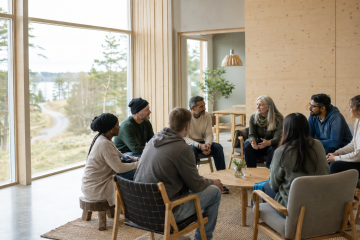
This module was created collaboratively by the entire training group. It synthesises the core themes of safety, inclusion, and community education into a practical training framework, designed to be adaptable across different fields and contexts.
The six concepts are at different stages of development—some are still in the planning phase, while others are already feeding into Femina’s activities. We will report on their progress on this site.
The six concepts are at different stages some are plans, some already feed into Femina’s activities. We will report on their progress on this site.

0 Comments