How Femina staff turned an Erasmus+ mobility in Latvia into practical adult learning tools

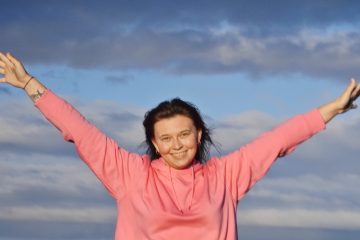
Femina participants and Latvian hosts during the study visit to Jūrmala Youth Initiatives Centre.
Safety education is often reduced to rules, procedures and compliance. But adults also need learning environments where they feel respected, included and confident enough to participate. This wider understanding of safety shaped an 8-day Erasmus+ learning mobility for six Femina ry staff members in Latvia.
Hosted by SIA Mācību centrs KOMUNĀLCELTNIEKS from 30 October to 6 November 2025, the programme connected women’s leadership and gender-specific risks with psychological safety, accessible learning, community participation and digital education. The aim was practical: every participant would leave with methods and materials that could be adapted in their own work.
Learning by moving between theory and practice
The programme followed a clear progression. Participants began with health and safety, leadership and gender-specific risks. They then explored European examples, digital platforms and peer-learning methods. Later sessions focused on unconscious bias, safe learning spaces, accessible materials and community engagement. The final days were devoted to designing, testing and presenting practical learning outputs.

This progression mattered because the topics were not treated separately. A digital tool was useful only if it supported the learning objective. A safety activity was stronger when it considered who could participate, who might be excluded and what alternatives were available.
The study visits made that connection visible. At FN-SERVISS, participants experienced virtual-reality training for occupational and fire safety. At Jūrmala Youth Initiatives Centre, they explored youth participation and community inclusion. Sara M. later described these visits as especially valuable because “they connected theory with real-life practice.”
Looking at Riga through an inclusion lens
One session took place in the city rather than the classroom. In small groups, participants observed Riga through three lenses: physical safety and accessibility, social safety and comfort, and inclusive urban design. They documented both useful features and everyday barriers, then discussed who might be affected and what could be improved.
The exercise turned inclusion into a habit of observation. A bench could support an older person or someone who needed to rest. A parked vehicle, shared scooter or inaccessible crossing could narrow the same public space for a wheelchair user, a parent with a stroller or a person with visual impairment.


From an idea to something others could use

The central learning process was simple and repeatable: choose a promising practice, adapt it to a real target group, define learning outcomes, select suitable tools, plan for accessibility and test the idea with peers. KOMUNĀLCELTNIEKS supported the process through activities on adapting best practices, designing short online modules and assessing digital platforms for usability and inclusion.
Five examples of participant-developed work
The 6 participants worked individually and collaboratively on project concepts and learning materials. Below are 5 examples developed during the mobility, ranging from biodiversity and nature-based wellbeing to women’s safety and inclusive workplaces. The participants also contributed to a joint
Community-Based Safety Training module.
Nature on the Move — As a practical application of the course themes, the participants developed an inclusive and intergenerational module connecting nature-based activities with wellbeing, psychological safety, equal participation and accessible adult education. Learners observe biodiversity, record species with Seek or iNaturalist and share reflections through collaborative boards or online meetings. The module includes multilingual guidance, non-digital alternatives and options for people who cannot take part in a conventional outdoor walk.
Women’s Activities with Flower Recycling — F-Cycling combines nature-based creative work, guided reflection and a carefully facilitated digital space for women who have experienced violence. Participants tested the flower- and leaf-recycling activity during the mobility and used a live word cloud to capture feelings and associations.
The Healing Power of Nature — This short module links nature with mental and physical wellbeing. Learners explore forest bathing, review research, complete a reflective activity and give peer feedback. The planned delivery combines Moodle and SurveyMonkey and offers captions, clear language and different ways to respond.
Justice Guardians — The learning concept examines safety, mentorship and inclusion for women in the justice sector and invites learners to consider institutional barriers, possible responses and the role of allies. Its relevance reaches beyond one country: it shows how adult education can address sensitive workplace issues without losing sight of participant safety.
Get to Know Our Biodiversity — This youth workshop combines an urban biodiversity walk with citizen science. Participants practise using iNaturalist, record local species and work in language-supported groups. The plan also includes a quiz and a longer observation campaign so that a one-day activity can lead to continued engagement.
Digital tools followed the learning purpose
The course introduced several platforms, but the participants were encouraged to begin with the learner, learning objective and the task rather than with the technology.

- Canva for visual guides, presentations and accessible explanations
- Moodle and Google Classroom for structuring online learning
- Padlet and Miro for collaboration, reflection and peer exchange
- Word clouds, surveys and quizzes for feedback, participation and learning evaluation
- iNaturalist and Seek for connecting digital learning with outdoor observation, biodiversity and citizen science
“This training changed the way I think about teaching, not just by introducing new digital tools, but by showing how inclusion, empathy, and technology can work together to create better learning experiences.”
— Isma M., follow-up survey
What happened after the mobility
The value of the mobility became clearer after participants returned to their work. Participant reports, daily reflections and follow-up responses showed gains in professional knowledge, leadership, digital competence, inclusive learning and intercultural cooperation.
All 6 participants completed the follow-up survey. All had used at least 1 of the introduced digital tools after the course: 4 had used them several times and 2 once or twice. All 6 had applied inclusive or accessible learning approaches. 5 had already created or improved an online lesson, module or learning activity, while 1 planned to do so. 5 had shared their learning with colleagues, while 1 planned further sharing.
“This training gave me the confidence and practical tools to design engaging online modules and seamlessly weave interactive digital tools into my group instruction.”
— Ganna O., follow-up survey
These results suggest that a mobility has more lasting value when participants return with something concrete: a module, activity plan, tested method or reusable digital resource. Internal sharing then becomes part of the learning process rather than a separate dissemination task.
Five lessons for adult education organisations
- Connect each example or study visit with a structured reflection task.
- Ask participants to develop a practical output during the mobility.
- Plan accessibility from the beginning, including language, technology and different ways to participate.
- Choose digital tools only after defining the learning objective and target group.
- Follow up later to learn what participants actually used, adapted and shared.
Recognition and next steps
All participants completed the mobility and received certificates of attendance and Europass Mobility documents recognising their learning outcomes. The project notebooks supported reflection and practical work throughout the programme.
The mobility strengthened cooperation between Femina ry and SIA Mācību centrs KOMUNĀLCELTNIEKS. The cooperation has already continued through a new approved Erasmus+ adult education project in which KCMC will again act as 1 of the host organisations. Femina will also continue adapting the learning materials and inclusive digital methods in its adult-education activities.
Project information
Women’s Leadership in Health and Safety Education | Erasmus+ KA122-ADU | Project reference 2025-1-FI01-KA122-ADU-000344787 | Sending organisation: Femina ry, Finland | Host and training provider: SIA Mācību centrs KOMUNĀLCELTNIEKS, Latvia
0 Comments