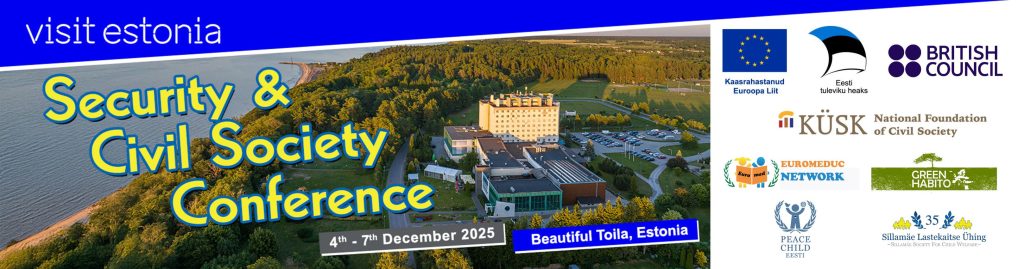
The V Security and Civil Society Conference 2025, held on 5–6 December 2025 at the Toila Spa Hotel in Toila, Estonia, brought together policymakers, civil society leaders, researchers, development professionals, and youth representatives from across Europe and partner regions. The conference addressed one of the most pressing questions of our time: how development cooperation can effectively contribute to European and global security in an era of political, social, and humanitarian turbulence.
The conference was organised by Peace Child Estonia and SSCW, in close cooperation with the European networks Green Habito and Euromeduc, with the support of the European Union Cohesion Policy Fund, Estonian National Foundation of Civil Society, and British Council Estonia. Its central theme — “The impact and effectiveness of development cooperation on European and global security in times of turbulence” — framed all discussions and working sessions.
Core Ideas from Conference Experts
Throughout the conference, high-level experts highlighted that security, development cooperation, and civil society empowerment are inseparable.
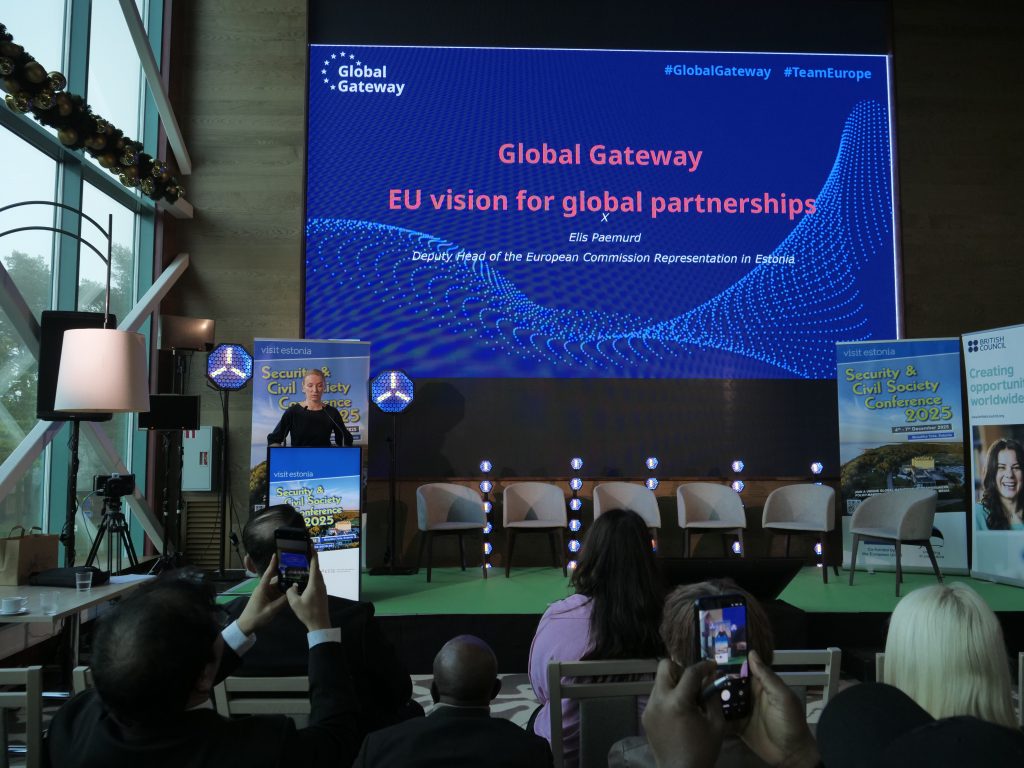
Kairi Saar-Isop, Director General of the Department for Development Cooperation and Humanitarian Aid at the Estonian Ministry of Foreign Affairs, emphasised that development cooperation must be grounded in inclusive governance and local ownership. She underlined that sustainable security outcomes cannot be achieved without treating civil society organisations as equal partners in policy design and implementation — particularly in fragile and conflict-affected contexts.
From a regional cooperation perspective, Maria Gratschew, Director of the Nordic Council of Ministers’ Office in Estonia, stressed that resilience in the Nordic-Baltic region depends on cross-border civil society networks. According to her, cooperation between governments and grassroots actors strengthens democratic culture and social cohesion, which are fundamental to long-term security.
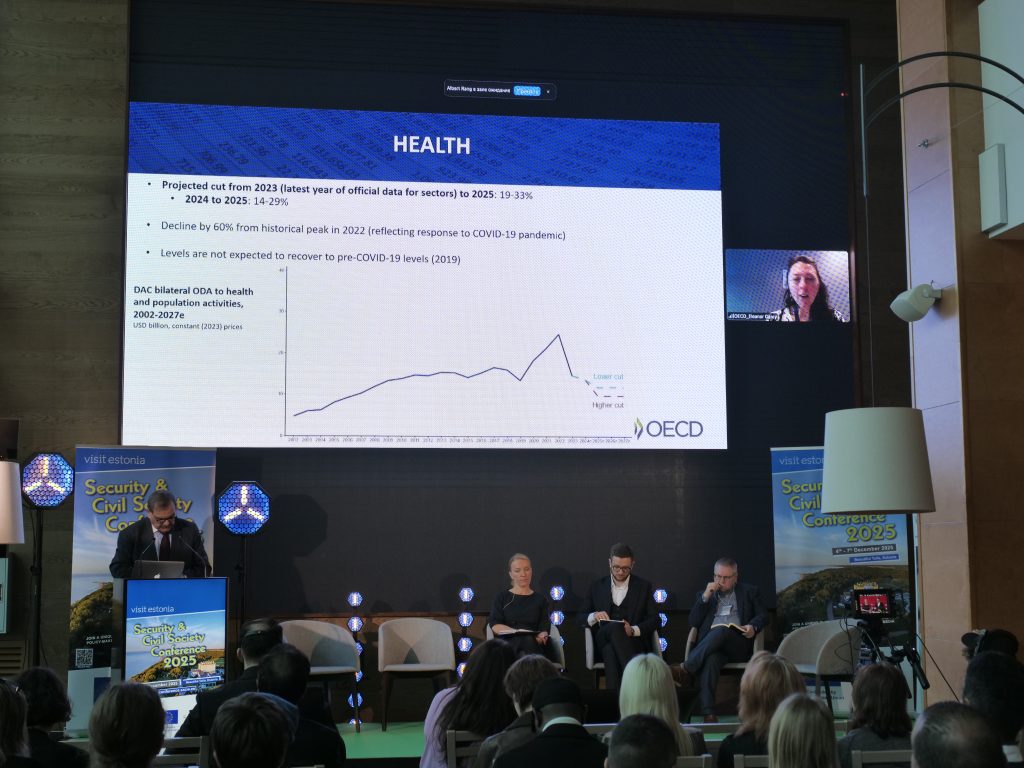
Addressing EU-level priorities, Elis Paemurd, Deputy Head of the European Commission Representation in Estonia, highlighted the growing impact of hybrid threats, including disinformation, cyber risks, and cognitive warfare. She noted that civil society plays a critical role in safeguarding democratic resilience and public trust, making its inclusion essential in future EU development and security strategies.
Rilli Lappalainen, President of CONCORD Europe, reinforced the need for genuine partnerships between institutions and civil society. She argued that consultation alone is insufficient; instead, development cooperation must be built on shared accountability, joint planning, and long-term trust to remain effective under increasing global pressures.
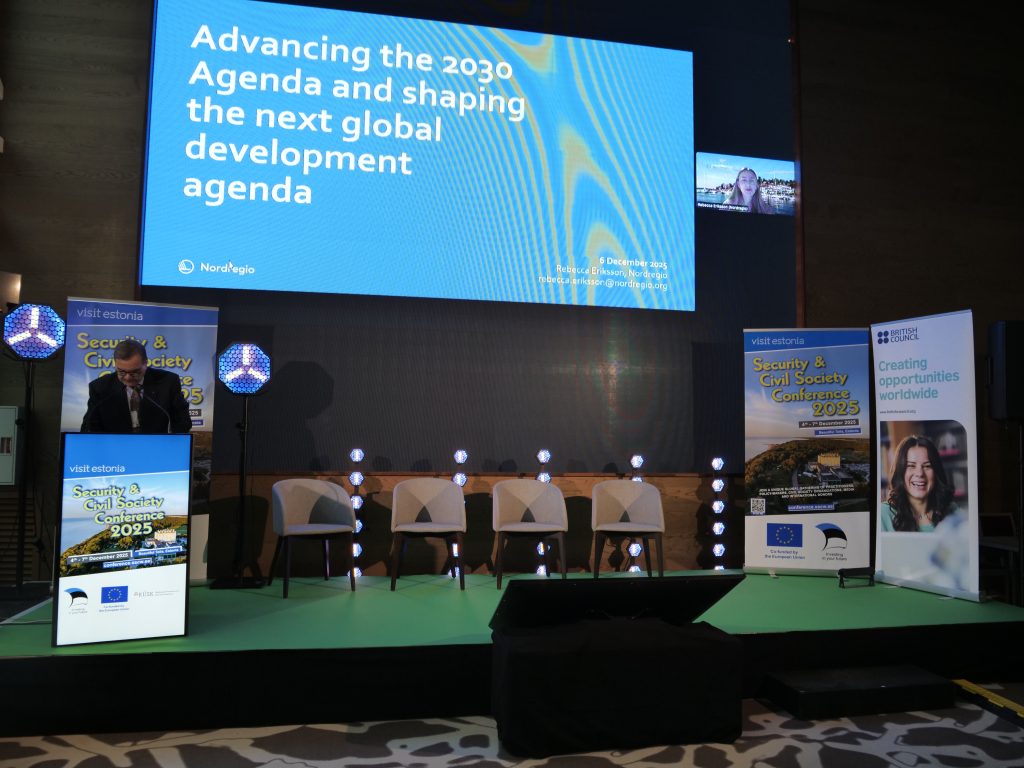
Looking ahead, Rebecca Eriksson, Junior Researcher at Nordregio (Sweden), introduced the concept of anticipatory governance. She highlighted the importance of foresight, data-driven analysis, and participatory planning to ensure that development cooperation remains adaptive and responsive in uncertain geopolitical environments.
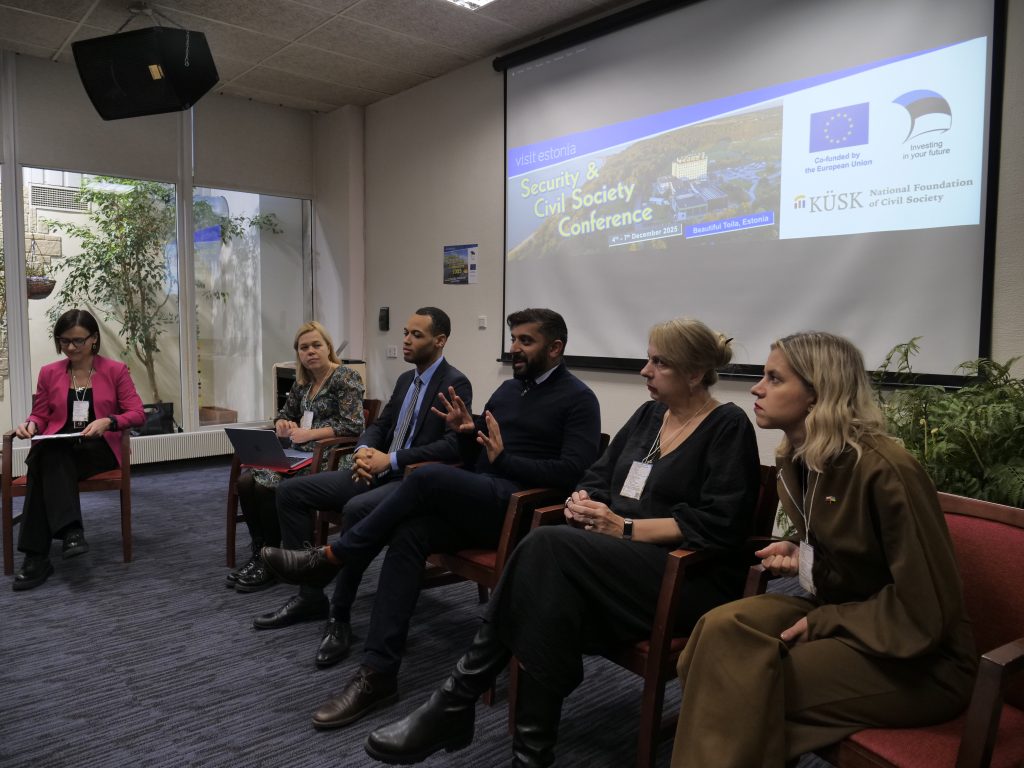
Together, these expert contributions underscored a shared message: inclusive, participatory, and gender-aware development cooperation is a cornerstone of resilient security frameworks.
From the perspective of Femina, the conference outcomes strongly resonate with the organisation’s mission to promote gender equality, women’s rights, and inclusive civil society participation in policy and development processes.
A representative of Femina noted:
“The V Security and Civil Society Conference clearly demonstrated that security cannot be separated from social justice and equality. For Femina, it was particularly important to see that gender equality, youth participation, and grassroots civil society engagement were treated as core components of effective development cooperation — not as secondary issues.”
Laura K.
Femina experts emphasised that women’s organisations and gender-focused civil society actors are often on the front lines of humanitarian response, community resilience, and peacebuilding. Yet, they remain underrepresented in formal decision-making. The conference’s focus on empowerment, partnership, and accountability aligns closely with Femina’s advocacy for inclusive governance and gender-responsive policy frameworks.
From Femina’s standpoint, the Conference Declaration developed during the event provides a valuable roadmap for strengthening cooperation between governments, donors, and civil society — particularly if its commitments are translated into concrete funding mechanisms and participatory policy practices.
The V Security and Civil Society Conference 2025 reaffirmed that sustainable security depends on inclusive development cooperation, where civil society — including women’s and youth organisations — plays a central role. For Feminary.fi, the conference served as both a source of strategic insight and a reminder that advancing gender equality is not only a social objective, but also a fundamental condition for resilient, democratic, and peaceful societies.
As global challenges continue to evolve remain committed to contributing to these discussions, ensuring that gender perspectives and civil society voices remain visible, valued, and influential in shaping future development and security policies.



0 Comments